Translate family measures accurately.
Convert pinches, handfuls, glasses, palms, and knobs into teaspoons, cups, milliliters, and grams without treating parsley like packed flour.

Get the ratio, temperature, time, substitution, or correction before dinner gets away from you.
The number first. The reason second. Dinner without the speech.
A recipe can be technically correct and still fail the cook who needs an answer now. If the meatball ratio appears after six paragraphs, the sauce is already simmering. If the baccalà schedule is vague, dinner planning starts a day too late.
The same problem appears in smaller kitchens. A restaurant formula may make two hundred portions, but dividing every number by one hundred does not account for pan size, evaporation, egg binders, reduction, or the way seasoning behaves in a small pot.
Family language creates another kind of uncertainty. A handful of parsley does not weigh what a handful of flour weighs. A glass depends on the glass. A knob of butter changes with the hand holding the knife.
Then there are corrections. Food tastes flat, salty, bitter, sour, greasy, thin, thick, or too sweet. Adding something at random can make the first error permanent. You need the correction sequence, the amount to begin with, and an honest stopping point when a dish cannot be rescued.

Each section starts with the usable instruction. The explanation follows so you know when the rule applies, when it changes, and when it should be ignored.
Convert pinches, handfuls, glasses, palms, and knobs into teaspoons, cups, milliliters, and grams without treating parsley like packed flour.
Respond to flat, salty, bitter, sour, greasy, thin, thick, or overly sweet food—and recognize when further correction will only waste ingredients.
Use exact meat weights, tomato proportions, browning temperature, simmer range, yield, and scaling notes instead of relying on pot size alone.
Prepare pasta e fagioli, pasta e ceci, dried fava dishes, pasta e patate, and potatoes and eggs for one person, two people, or a family.
Follow a day-by-day slicing, wrapping, freezing, thawing, and reheating system, with oven, skillet, and toaster methods for hard bread.
Store and use cheese rinds, rendered fat, parsley stems, broccoli stems, celery leaves, and clean trimmings with a practical keep-or-discard test.
Make a small batch of stock, direct it into soup, beans, or rice, then adjust leftover meat into polpette according to its moisture and fat.
Start with the meat-to-breadcrumb-to-liquid-to-egg ratio, then diagnose dense, loose, cracked, or greasy meatballs before repeating the mistake.
Choose braciole cuts, chuck, shank, neck, shoulder, tripe, liver, and sausage by cooking method, doneness cue, and trimming loss—not sticker price alone.
Use a timed soaking and water-change schedule, then separate safe refrigerated preparations from shelf-stable commercial products and unsafe folklore.
Evaluate imported, San Marzano, extra virgin, fresh, packed in Italy, and product of Italy using origin statements, ingredients, pack size, and unit cost.
Adjust egg binders, seasoning, reductions, pan size, and evaporation with a rounding system for formulas that do not divide cleanly.
Test tomatoes, olive oil, pasta, Parmigiano, anchovies, sausage, and bread by aroma, acidity, bitterness, texture, cooking loss, and usable cost.
Organize Christmas Eve and Easter by soaking time, burner space, oven demand, resting time, holding limits, and the final fifteen minutes.
See which habits Sal stopped using—from casual oil storage to unsafe cooling—and the practical reason each replacement works better.
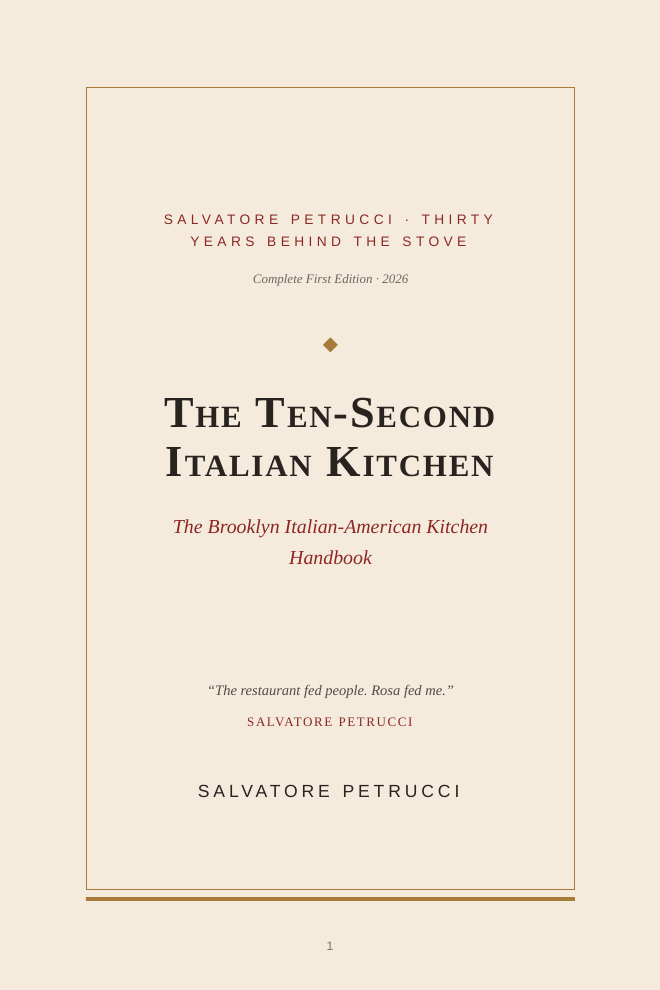
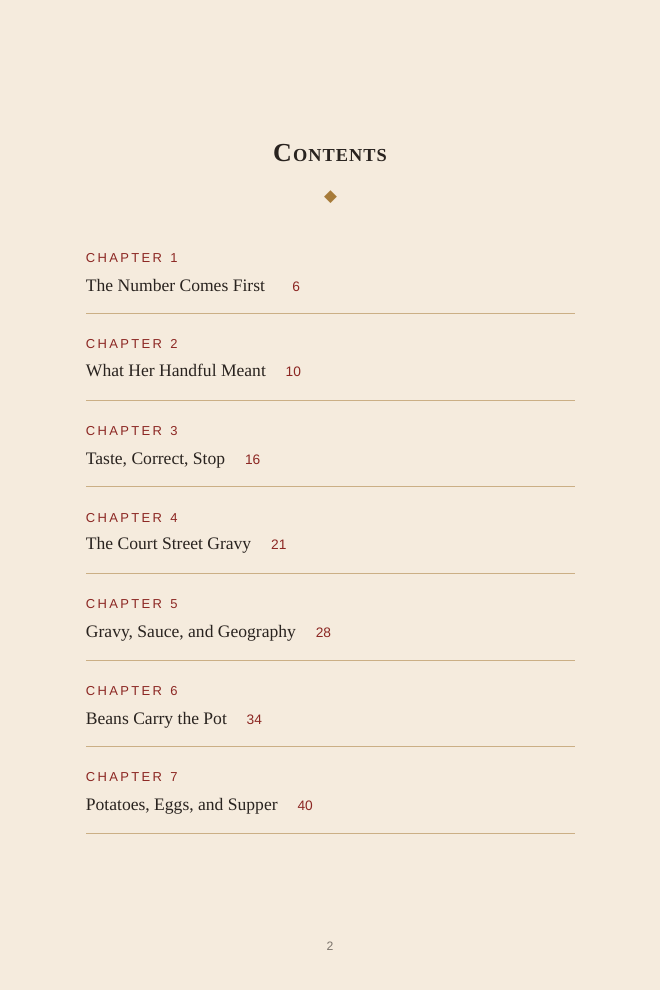
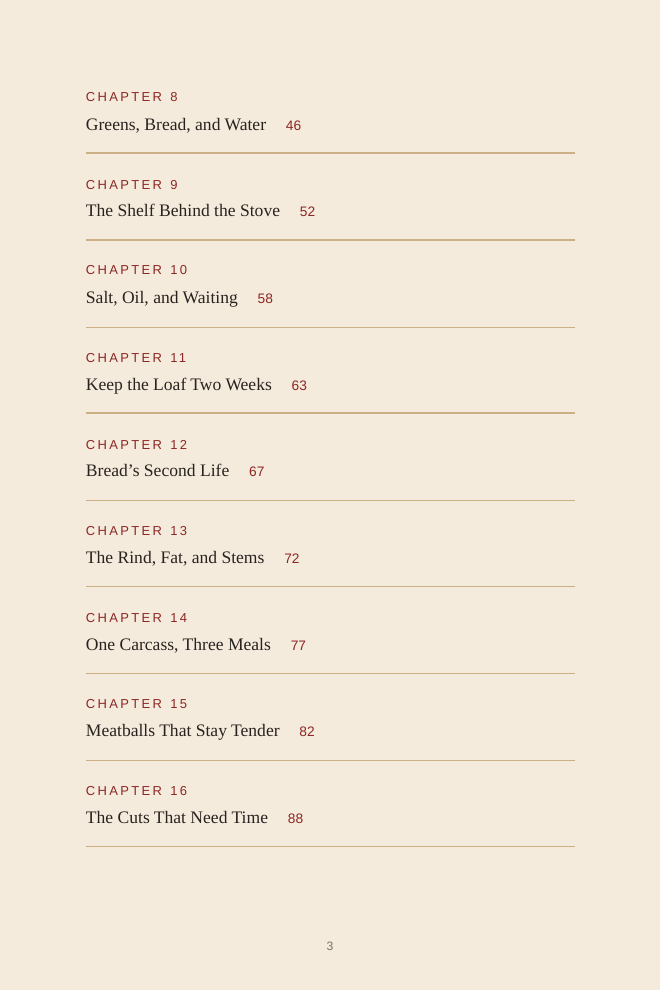
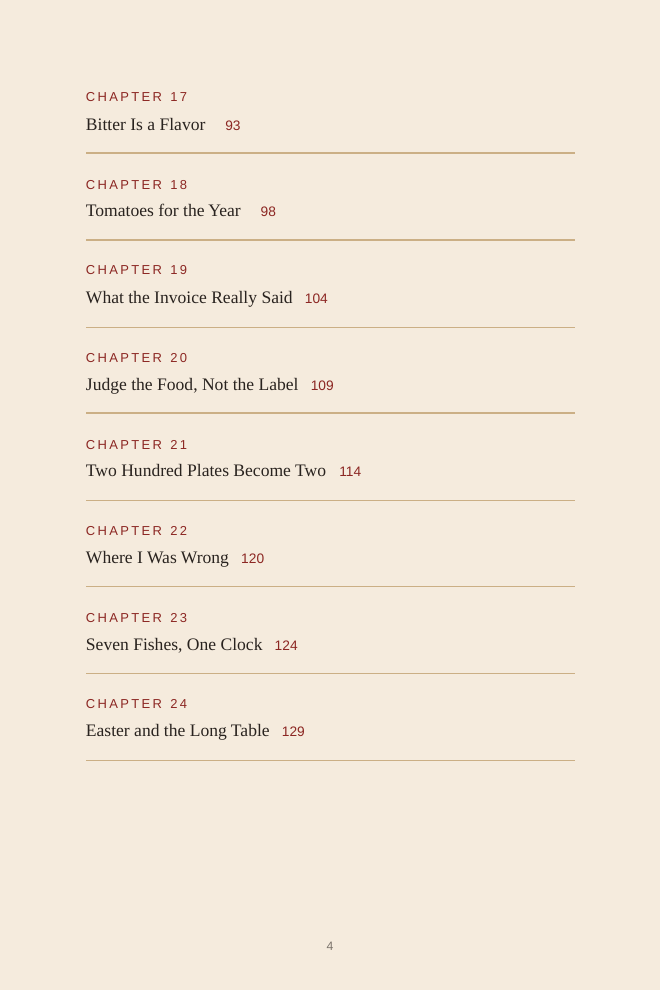
These are pages from the handbook itself. The layout is designed for quick scanning beside the stove, with working numbers separated from the explanation.
Instant PDF access with free lifetime updates.
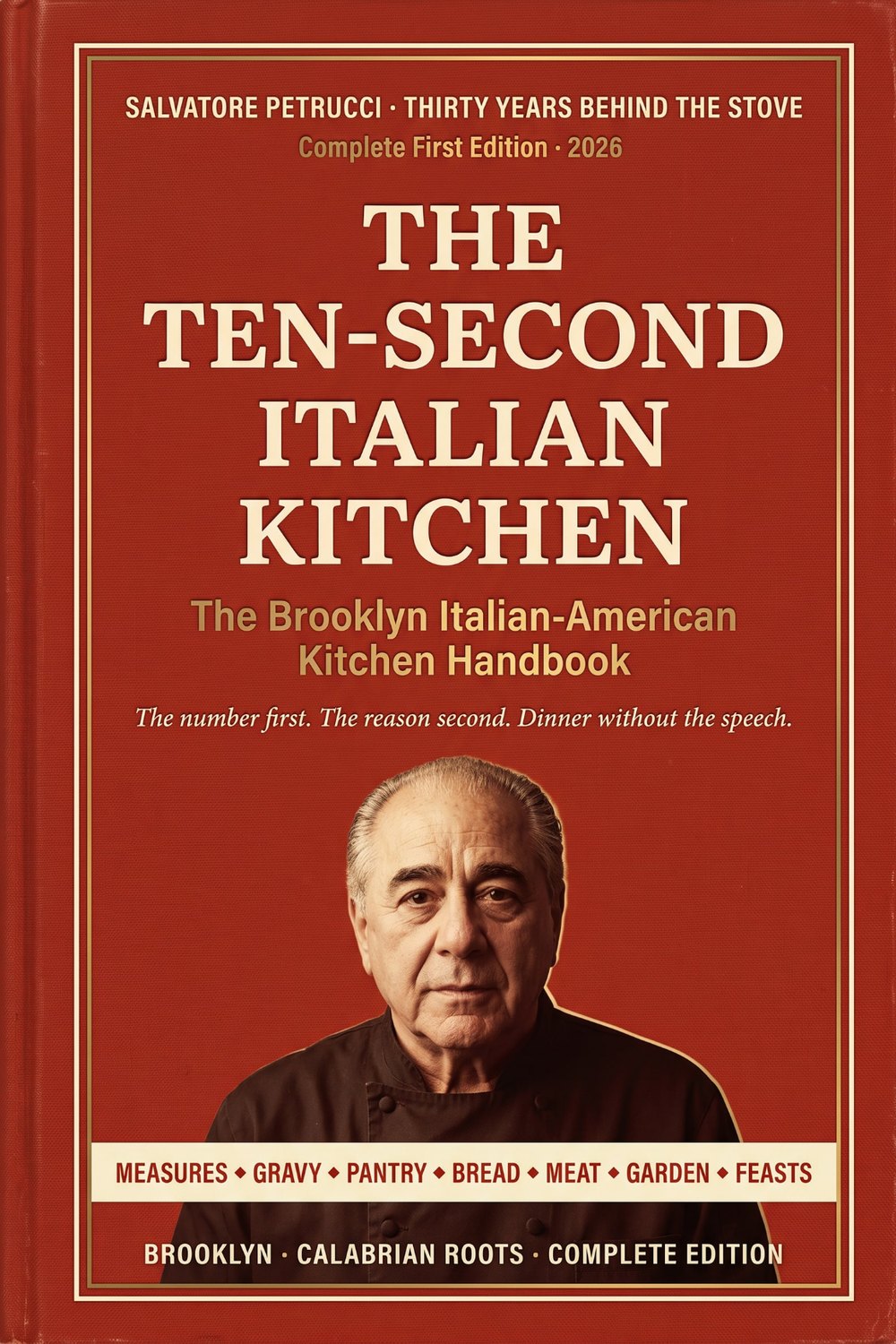
The Ten-Second Italian Kitchen is a 134-page handbook for cooks who want the usable answer before the background story.
It exists because family recipes often preserve knowledge in a form that depends on already knowing the cook. “A handful,” “until it looks right,” and “the usual amount” work only when the original hand is still in the room.
Restaurant formulas create the opposite problem. They may be exact, but exact for a large stockpot, a wide burner, a walk-in cooler, and two hundred plates. A home cook needs the part that survives scaling—and a warning about the part that does not.
Salvatore wrote the numbers down, tested the substitutions against the job they must perform, and placed the explanation after the immediate instruction. The result is not a glossy tour of Italian food. It is a kitchen handbook meant to be used.
This is not for a reader who wants long travel writing before every recipe, a single claim about what all Italian families call sauce or gravy, or nostalgia that treats poverty as picturesque.
It is for a cook who wants quantities, reasons, honest substitutions, safe handling, and a clear answer about whether an expensive ingredient is doing useful work.
Receive the complete first edition as a PDF. Read it on your phone, tablet, or computer, or print the pages you return to most.
The book covers everyday corrections, pantry meals, bread storage, meat and greens, label reading, recipe scaling, food-safety principles, and the production planning behind larger family meals.
| Included | Format | Practical use |
|---|---|---|
| Complete first edition | 134-page PDF | Read digitally or print selected pages for the kitchen. |
| 24 chapters | Structured reference | Move directly to measures, corrections, gravy, bread, meat, safety, labels, scaling, or feasts. |
| Multiple household scales | One-person, two-person, family, and restaurant quantities where needed | Cook for the table you have without forcing every formula through the same division. |
| Lifetime updates | Future PDF revisions | Receive corrected and updated material without buying the book again. |
Open the PDF, inspect the tables, read the correction sequences, and try the handbook against the way you actually cook. If it is not useful to you, request a refund within 30 days.
There is no claim that one book will replace judgment or current food-safety guidance. The promise is narrower: the material should give you practical numbers, understandable reasons, and a faster path to a sound kitchen decision.
Instant PDF access. Free lifetime updates included.
It contains complete recipes, including Court Street Sunday gravy, meatballs, pasta and bean dishes, potatoes and eggs, greens, bread dishes, baccalà, and holiday plans. It is broader than a recipe collection. It also covers measurements, corrections, storage, substitutions, ingredient buying, usable yield, scaling, and kitchen safety.
Yes. Smaller tables are part of the book’s purpose. Several dishes include one-person, two-person, and family quantities. The scaling chapter explains why reductions, egg binders, seasoning, evaporation, and pan size cannot always be reduced by simple division.
No. The book explains traditional ingredients, their function, realistic storage, and the least dishonest substitution. It does not tell you that every imported product is automatically better. The label and invoice chapters help you decide whether a premium ingredient earns its cost.
No. Salvatore states where older practice should be replaced by better guidance. The book addresses cooling, vegetables under oil, garlic in oil, baccalà handling, and tomato preservation without treating folklore as a safety test. For canning, readers are directed to current tested processing guidance for jar size and altitude.
Yes. You may read the PDF on your device or print the pages you want beside the stove. The book is arranged as a reference, so printing individual tables, schedules, and recipes is practical.
You receive instant access to the complete 134-page PDF. Free lifetime updates are included. You also have 30 days to decide whether the handbook is useful to you and request a refund if it is not.
Keep the meatballs tender. Correct the sauce before adding more of the wrong thing. Make the smaller pot. Store the bread properly. Read the label past the expensive word.
The family story is still here. It simply waits until after the answer you need.
134 pages · Instant PDF access · 30-day refund · Lifetime updates
Ratios, times, temperatures, substitutions, corrections, storage systems, scaling notes, and feast schedules—followed by the reason each method works.
Includes free lifetime updates and a 30-day refund.